

- By Admin
- 07 Sep, 2026
- Mobile Apps
Game Mobile App Development: A Complete Guide to Building Successful Mobile Games
The mobile gaming industry has become one of the most exciting areas of digital entertainment. Smartphones and tablets have made gaming accessible to people everywhere, creating opportunities for businesses, startups, entrepreneurs, and game creators to turn innovative ideas into engaging mobile experiences.
However, building a successful mobile game requires more than simply creating attractive graphics. A great game combines an interesting concept, smooth gameplay, intuitive controls, appealing visuals, reliable performance, and a strong monetization strategy.
This is where professional game mobile app development plays an important role.
Whether you are planning a casual puzzle game, an action-packed multiplayer experience, a strategy game, or a trivia-based application, the development process needs careful planning from the initial idea through launch and post-launch support.
At Webwiders, we provide end-to-end mobile game development services for businesses, startups, and game entrepreneurs looking to transform their concepts into engaging Android and iOS gaming experiences.
What Is Game Mobile App Development?
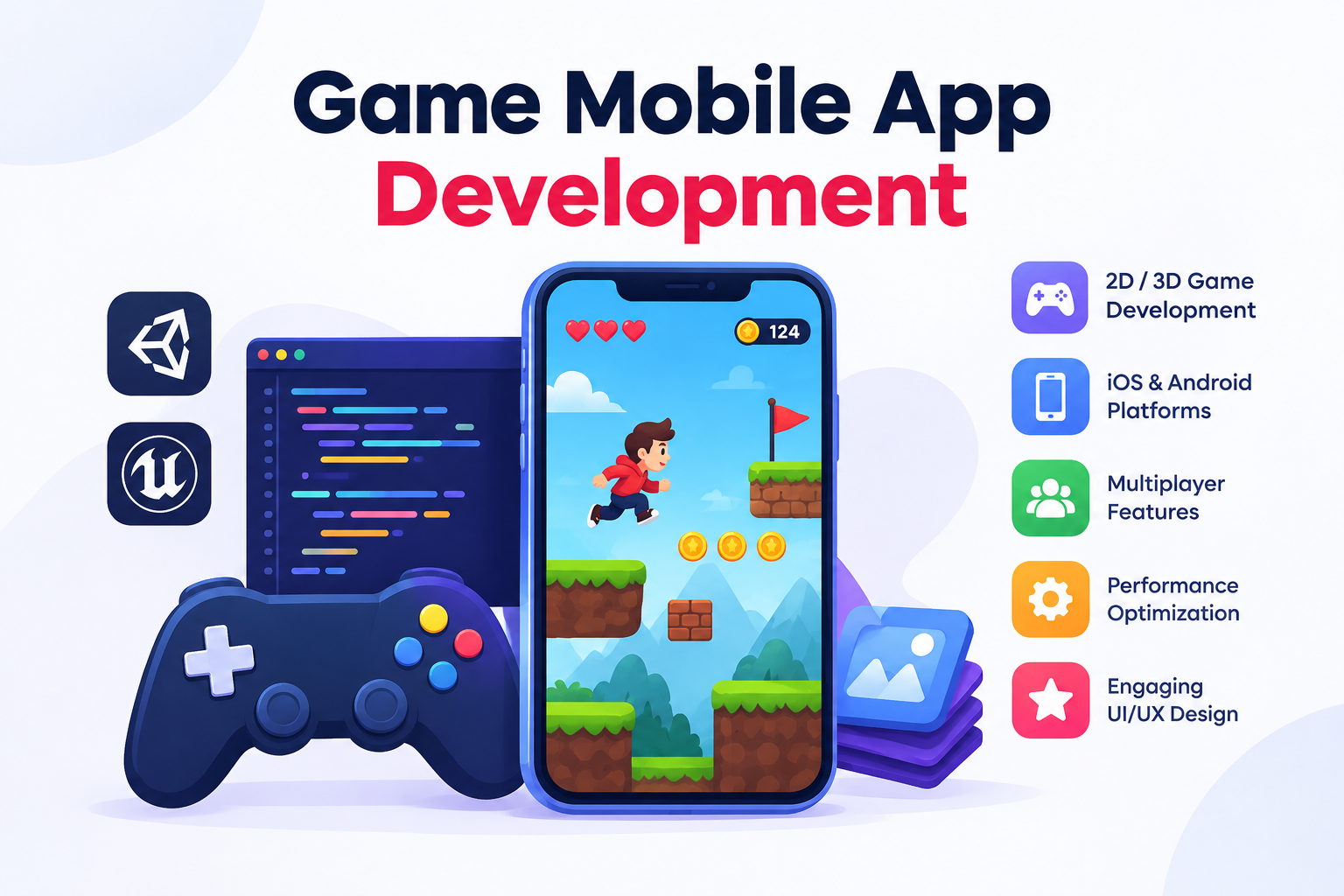
Game mobile app development is the process of designing, developing, testing, launching, and maintaining games specifically for mobile devices such as smartphones and tablets.
Unlike traditional software applications, mobile games need to focus heavily on user engagement and interactive experiences. Developers need to consider screen sizes, touch controls, device performance, operating systems, network connectivity, graphics performance, and battery consumption.
A mobile game development project generally involves several important stages:
- Game concept and planning
- Game design
- UI/UX design
- Game development
- Graphics and animation
- Backend and multiplayer development
- Testing and optimization
- App store deployment
- Maintenance and updates
The exact process depends on the type and complexity of the game being developed.
Why Invest in Mobile Game Development?
Mobile games provide businesses with an opportunity to reach a large and diverse audience. The accessibility of smartphones means users can play games at home, while traveling, during breaks, or whenever they have free time.
A well-designed mobile game can also create multiple revenue opportunities.
Some common monetization models include:
In-App Purchases
Players can purchase virtual items, additional features, characters, levels, or other digital content within the game.
Advertising
Games can generate revenue through advertisements, including rewarded videos, banners, and interstitial ads.
Premium Games
Users pay a one-time price to download and access the game.
Subscription-Based Games
Players can pay regularly to access premium content, exclusive features, or additional benefits.
Freemium Model
The basic game is available for free while advanced features or digital items are offered as paid options.
Choosing the right monetization strategy depends on the game genre, target audience, gameplay model, and business objectives.
Types of Mobile Games We Can Develop
Mobile gaming covers a wide range of genres. Each genre has different gameplay requirements, design approaches, and technical challenges.
Casual Games
Casual games are generally designed to be easy to understand and quick to play. They can be suitable for users who want short and entertaining gaming sessions.
Examples include:
- Match-three games
- Endless runners
- Simple arcade games
- Word games
- Memory games
The focus is often on simple controls, engaging gameplay, and quick progression.
Puzzle Games
Puzzle games challenge players to solve problems, recognize patterns, or complete specific objectives.
They can include:
- Logic puzzles
- Matching games
- Number puzzles
- Brain games
- Trivia puzzles
Good puzzle game development requires carefully balanced difficulty levels so that players remain challenged without becoming frustrated.
Trivia Games
Trivia games allow players to test their knowledge across different subjects.
Features can include:
- Multiple-choice questions
- Categories
- Timed challenges
- Leaderboards
- Player rankings
- Rewards
- Multiplayer competitions
Trivia games can also be designed for educational and entertainment purposes.
Action Games
Action games require responsive controls, smooth animations, and engaging gameplay mechanics.
These games may include:
- Combat
- Missions
- Characters
- Weapons
- Levels
- Challenges
- Rewards
Performance optimization becomes particularly important when games contain complex animations and visual effects.
Strategy Games
Strategy games require players to make decisions, plan actions, and manage resources.
These may include:
- Resource management
- Character development
- Building systems
- Competitive gameplay
- Missions
- Player rankings
Strategy games often require deeper game mechanics and carefully designed progression systems.
Multiplayer Games
Multiplayer games allow users to interact or compete with other players.
Depending on the game, multiplayer functionality may include:
- Real-time matches
- Player matchmaking
- Chat
- Leaderboards
- Friend systems
- Player profiles
- Online competitions
Multiplayer development can require additional backend infrastructure and real-time communication capabilities.
Our End-to-End Mobile Game Development Services
Professional game development involves much more than writing code. Every part of the experience needs to work together to create an enjoyable and reliable product.
At Webwiders, our mobile game development services cover the complete development lifecycle.
Game Concept Development
Every successful game starts with a strong concept.
During the initial stage, the game idea can be evaluated based on:
- Target audience
- Game genre
- Core gameplay
- Unique features
- Competitor landscape
- Monetization opportunities
- Platform requirements
The goal is to establish a clear direction before development begins.
A well-defined concept can help reduce unnecessary development changes later in the project.
Game Design
Game design defines how the game actually works.
This includes gameplay mechanics, player progression, scoring, rewards, levels, challenges, characters, and rules.
A strong game design should answer questions such as:
- What does the player need to accomplish?
- How does the player control the game?
- How does the difficulty increase?
- What rewards does the player receive?
- What keeps the player coming back?
- How can the game remain enjoyable over time?
These decisions form the foundation of the overall gaming experience.
UI/UX Design
The user interface needs to be simple enough for players to understand quickly.
Mobile game interfaces may include:
- Home screens
- Player profiles
- Menus
- Game controls
- Scoreboards
- Settings
- Achievement screens
- Purchase screens
The UX should ensure that players can navigate through the game without unnecessary complexity.
Mobile Game Development
Once the design and technical requirements are finalized, the development team converts the game concept into a functional mobile application.
Development may include:
- Gameplay mechanics
- Player controls
- Game logic
- Levels
- Scoring
- Rewards
- Characters
- Animations
- Sound integration
- Data management
- Backend functionality
The technology stack can be selected according to the game's requirements, target platforms, performance expectations, and development scope.
Android Game Development
Android provides access to a broad range of smartphones and tablets.
Android game development needs to consider different:
- Screen sizes
- Hardware configurations
- Operating system versions
- Device capabilities
- Performance levels
Proper optimization and testing are important to ensure consistent gameplay across supported Android devices.
iOS Game Development
iOS game development focuses on creating smooth experiences for Apple devices.
Developers need to consider:
- iPhone and iPad screen sizes
- Touch interactions
- Device performance
- iOS compatibility
- App Store requirements
Testing across supported Apple devices helps ensure that the final game performs reliably.
Multiplayer Game Development
For games involving multiple players, backend functionality becomes an important part of development.
A multiplayer system may include:
- User accounts
- Matchmaking
- Game sessions
- Player synchronization
- Leaderboards
- Online competitions
- Notifications
- Player communication
The architecture should be planned according to whether the game requires real-time multiplayer functionality or asynchronous gameplay.
Important Features of a Mobile Game
The features required for a mobile game depend on its genre and business model. However, several features can improve the overall gaming experience.
User Registration and Profiles
Players can create accounts and maintain personal profiles containing game progress, achievements, rankings, and other information.
Social Features
Social functionality can help players interact with friends and other members of the gaming community.
Possible features include:
- Friends
- Player invitations
- Chat
- Sharing
- Challenges
Leaderboards
Leaderboards allow players to compare scores and rankings, creating an additional competitive element.
Achievements and Rewards
Achievements can encourage players to complete specific objectives and continue progressing through the game.
Levels and Challenges
A structured progression system gives players clear goals and allows the game to become more challenging over time.
Push Notifications
Notifications can inform users about:
- New challenges
- Rewards
- Events
- Updates
- Special offers
Notifications should be used carefully so they remain useful rather than becoming disruptive.
In-App Purchases
Games can offer virtual items, premium content, upgrades, or other digital products through in-app purchases.
Analytics
Analytics can help game owners understand player behavior and identify areas where the experience can be improved.
Technologies Used in Mobile Game Development
The technology used for a mobile game depends on its requirements.
Development teams may use different game engines, frameworks, programming languages, backend technologies, databases, cloud services, and third-party integrations.
The technology selection can depend on factors such as:
- Game complexity
- Graphics requirements
- Target platforms
- Multiplayer requirements
- Performance
- Development timeline
- Future scalability
For a simple 2D game, the technical requirements may be very different from those of a complex multiplayer game with advanced graphics.
Therefore, technology decisions should be made after evaluating the complete project requirements rather than selecting a technology simply because it is popular.
The Mobile Game Development Process
A structured development process helps transform an initial idea into a production-ready game.
Step 1: Requirement Analysis
The first stage is understanding the game idea and defining the project requirements.
This includes identifying:
- Target audience
- Platforms
- Game genre
- Core gameplay
- Features
- Monetization model
- Backend requirements
- Expected launch scope
Step 2: Game Planning
The next stage involves creating a clear development roadmap.
The team can define the game mechanics, technical architecture, user flow, design direction, and development milestones.
Step 3: UI/UX and Game Design
Designers create the visual direction and interface of the game.
This stage establishes the look and feel of the game before the complete development process progresses.
Step 4: Development
Developers implement the game mechanics and required features.
The development process can include both frontend/game development and backend development depending on the project.
Step 5: Integration
Required services and integrations are connected to the game.
These may include:
- Payment systems
- Analytics
- Notifications
- Authentication
- Social features
- Backend services
Step 6: Testing
Testing is an essential part of mobile game development.
The game can be tested for:
- Functional issues
- Gameplay problems
- UI issues
- Performance
- Device compatibility
- Crashes
- Network-related problems
- Multiplayer synchronization
Step 7: Optimization
After testing, the game can be optimized for better performance.
Optimization may involve improving:
- Loading times
- Memory usage
- Graphics performance
- Network performance
- Battery consumption
- App stability
Step 8: Launch
After the game has been tested and prepared, it can be submitted to the appropriate mobile app stores.
The launch process includes preparing the required app information, screenshots, descriptions, and other store assets.
Step 9: Maintenance and Support
Game development does not necessarily end after launch.
Ongoing support can include:
- Bug fixing
- Performance improvements
- New features
- Content updates
- Compatibility updates
- Security improvements
Regular updates can help keep the gaming experience fresh and reliable.
How Much Does Mobile Game App Development Cost?
The cost of developing a mobile game varies significantly depending on the project's scope.
A simple casual game may require considerably fewer resources than a complex multiplayer game.
Several factors influence the development cost:
Game Complexity
More advanced gameplay mechanics generally require more development effort.
Number of Platforms
Developing for Android, iOS, or both can influence the project scope.
Graphics and Animation
Custom characters, environments, animations, visual effects, and other graphical elements can increase development requirements.
Multiplayer Functionality
Real-time multiplayer functionality typically requires additional backend development and infrastructure.
Number of Features
More features generally mean more development, testing, and maintenance requirements.
Backend Requirements
Games requiring accounts, player data, leaderboards, matchmaking, cloud storage, or other backend functionality require additional technical work.
Post-Launch Support
Ongoing maintenance, new features, content updates, and optimization should also be considered when planning the overall budget.
For this reason, it is better to define the game requirements first and then estimate the project cost according to the actual scope.
Challenges in Mobile Game Development
Developing a mobile game can involve several challenges.
Maintaining Performance
Games need to run smoothly even on devices with different hardware capabilities.
Poor performance can negatively affect the player experience.
Device Compatibility
Android and iOS devices come in different configurations and screen sizes. Testing across supported devices is therefore important.
Keeping Players Engaged
A game needs compelling gameplay and progression to encourage players to continue playing.
Managing Multiplayer Systems
Online games need reliable communication between players and servers. Network problems and synchronization issues can affect gameplay.
Balancing Monetization
Monetization should provide business value without making the game frustrating for players.
Continuous Updates
Player expectations can change over time. New content, features, and improvements may be required to keep the game relevant.
How to Make a Mobile Game More Engaging
Creating an engaging game requires attention to both gameplay and the overall user experience.
Create Simple and Intuitive Controls
Mobile users interact primarily through touch. Controls should be easy to understand and responsive.
Build a Clear Progression System
Levels, achievements, rewards, and challenges can give players clear reasons to continue.
Provide Meaningful Rewards
Rewards can make progress more satisfying and encourage users to complete challenges.
Focus on Game Performance
Fast loading, responsive controls, stable gameplay, and optimized graphics contribute to a better experience.
Design for Your Target Audience
The game mechanics, visual style, difficulty, and monetization strategy should match the intended audience.
Keep Improving After Launch
Player feedback and analytics can help identify opportunities for improvement.
Why Choose Webwiders for Game Mobile App Development?
Choosing the right development partner can make a significant difference when turning a game concept into a working product.
Webwiders provides end-to-end mobile game development services designed for businesses, startups, and game entrepreneurs.
Our approach covers the complete journey from the initial game concept through development, launch, and ongoing support.
We focus on creating mobile gaming experiences that combine:
- Engaging gameplay
- User-friendly interfaces
- Reliable functionality
- Platform compatibility
- Performance optimization
- Scalable technical architecture
Our services can support game projects across different genres, including casual, puzzle, action, strategy, trivia, and multiplayer games.
The goal is to understand the unique requirements of each project and develop a solution around its specific audience and business objectives.
Start Your Mobile Game Development Journey
A successful mobile game starts with a strong idea, but turning that idea into a polished product requires thoughtful planning, creative design, technical development, testing, and continuous improvement.
Whether you have a completely new game concept or want to transform an existing idea into an Android and iOS application, a structured development approach can help turn your vision into a real gaming experience.
From casual and puzzle games to action, strategy, trivia, and multiplayer experiences, mobile game development offers many opportunities for businesses and entrepreneurs.
The right combination of game design, technology, performance, user experience, and monetization can help create a product that is enjoyable for players and valuable for the business behind it.
Webwiders offers complete mobile game development services—from concept and design to development, launch, and ongoing support. If you have a game idea, our team can help you turn that concept into an engaging mobile experience.
Frequently Asked Questions
1. What is mobile game app development?
Mobile game app development is the process of designing, developing, testing, launching, and maintaining games for smartphones and tablets, including Android and iOS devices.
2. What types of mobile games can be developed?
Mobile games can be developed across multiple genres, including casual, puzzle, trivia, action, strategy, arcade, and multiplayer games.
3. Can you develop games for both Android and iOS?
Yes. Mobile game projects can be developed for Android, iOS, or both platforms depending on the project requirements and target audience.
4. What features can be included in a mobile game?
Features may include user profiles, levels, challenges, rewards, leaderboards, achievements, notifications, social functionality, in-app purchases, analytics, and multiplayer functionality.
5. How long does it take to develop a mobile game?
The development timeline depends on the game's complexity, number of platforms, features, graphics, multiplayer requirements, and overall project scope. A clear estimate can be provided after analyzing the requirements.
6. How much does mobile game development cost?
There is no fixed cost because every game is different. The cost depends on gameplay complexity, features, graphics, platforms, backend requirements, and integrations.
7. Do you provide post-launch game support?
Yes. Mobile game development can include ongoing maintenance, bug fixes, performance optimization, compatibility updates, new features, and other post-launch support based on the project requirements.
8. Can I start with an MVP version of my game?
Yes. Starting with an MVP can be a practical approach for validating the core game concept before investing in a larger version with additional features and content.